
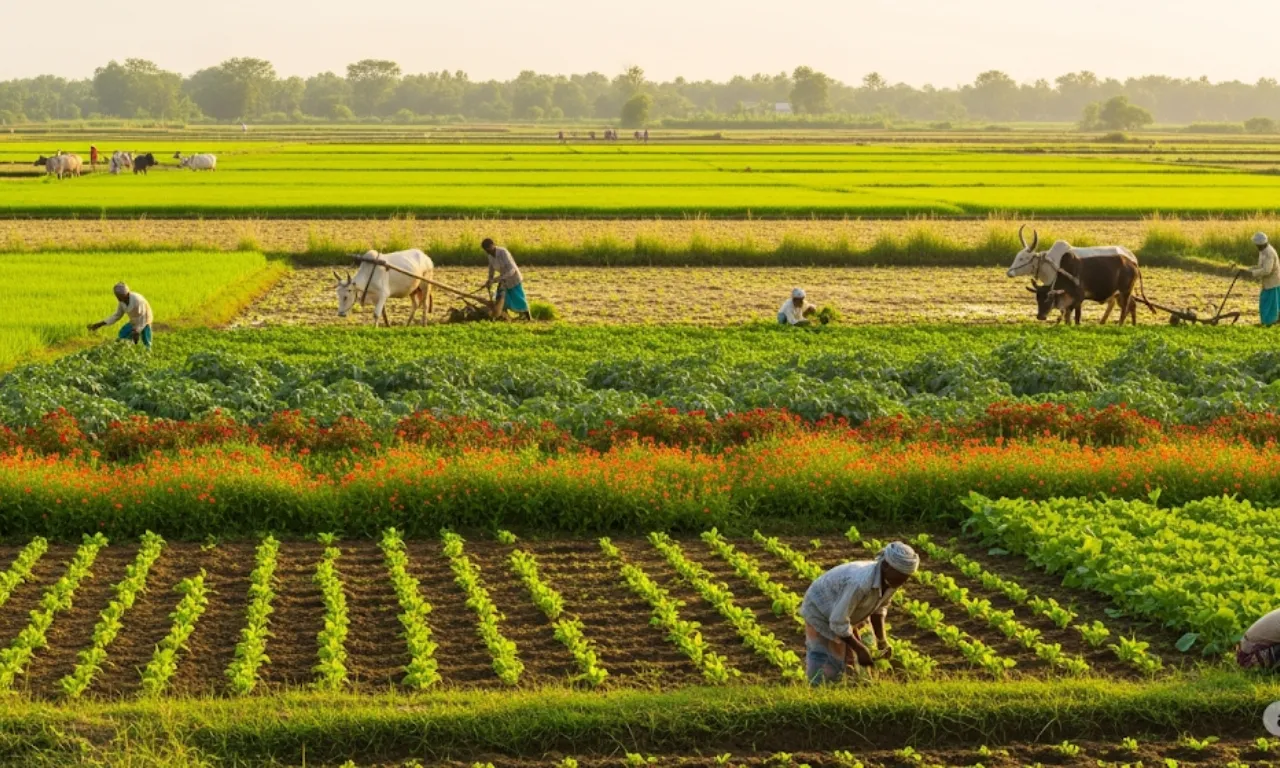
- Cabinet approves Prime Minister Dhan-Dhaanya Krishi Yojana with Rs 24,000 crore annual budget to develop 100 low productivity agricultural districts.
- This scheme will run for 6 years, focusing on crop diversification, sustainable farming, and better irrigation by combining 36 existing schemes.
- Each district gets a master plan, with 117 KPIs tracked through a digital dashboard to improve farmer welfare and help India become independent in agriculture.
Prime Minister Dhan-Dhanya Krishi Yojana (PMDDKY) was recently approved by the Cabinet with the goal of transforming 100 low productivity agricultural districts across India. With a large annual budget of Rs 24,000 crore, this scheme is meant to help farmers by boosting productivity, encouraging crop diversification, improving irrigation, and promoting sustainable farming. This article explains how districts are chosen, the development plans, and the strong monitoring system in place.
How the 100 Target Agricultural Districts Are Chosen
The process to pick districts under PM Dhan-Dhaanya Krishi Yojana is clear. It focuses on areas with low agricultural productivity to get the best results.
Main Signs: Productivity, Cropping Intensity, and Credit Given
Three main measures decide which districts are selected:
- Low productivity: Districts with crop yields below a certain level.
- Cropping intensity: This shows how many crops are grown on the same land in a year. Lower numbers mean the land isn’t used efficiently.
- Credit given: Districts that get less agricultural credit show room for financial growth.
This data-driven approach makes sure help goes to the areas that need it most.
How Districts Are Spread Across States and Union Territories
Districts will be picked so every state and union territory has at least one district included. The number of districts from each area depends on their share of net cropped area and farming holdings. This fair split supports balanced agricultural growth across the country.
Detailed Development Plan for Each District
Each of the 100 districts will have a master plan created to make focused improvements in farming and related activities.
Also Read – PM Dhan-Dhanya Krishi Yojana: Full List of 100 Selected Agricultural Districts
Combining 36 Existing Schemes and Local Partnerships
PMDDKY will bring together 36 existing government schemes from 11 departments in one combined approach. Besides this, local state schemes and private partnerships will be used. This teamwork optimizes resources and avoids overlap.
Committees and Their Roles for Strong Implementation
Committees at district, state, and national levels will manage planning, implementation, and tracking progress. At the district level, the District Dhan Dhaanya Samiti, led by the district collector, will finalize detailed agriculture plans, including progressive farmers as members to provide practical insights.
Role of Agricultural Universities as Knowledge Partners
Central and State agricultural universities will act as technical partners, applying scientific knowledge and innovations suited to each district’s needs. This teamwork makes sure modern farming techniques reach farmers effectively.
Focus on Sustainable Farming Methods and Crop Diversification
The scheme promotes sustainable methods to save soil and water, encourage natural and organic farming, and diversify crops grown. These methods help improve long-term productivity and environmental health.
Tracking Progress with Performance Indicators and Digital Dashboard
A full monitoring system tracks scheme progress using 117 key performance indicators (KPIs) updated every month. An online portal/dashboard will provide clear data for officials and stakeholders to review progress and make good decisions.
Benefits for Farmers and Indian Agriculture
By improving these 100 districts, PMDDKY aims to raise productivity and add more value in farming. This leads to better incomes locally, higher domestic production, and supports Atmanirbhar Bharat – India’s vision for independence. As these districts develop, national agricultural numbers will naturally improve.
Scheme Highlights
| Annual Budget | Rs 24,000 crore |
| Duration | 6 Years (2025-26 to 2030-31) |
| Number of Districts Covered | 100 Agricultural Districts |
| Key Measures Used | Productivity, Cropping Intensity, Credit Given |
| Monitoring | 117 Monthly KPIs & Digital Dashboard |
| Official Website | pmkisan.gov.in |
With focused work and active involvement from farmers, government bodies, universities, and private partners, the Prime Minister Dhan-Dhanya Krishi Yojana is set to bring a noticeable change in India’s lowest performing farming districts. If you are a farmer or stakeholder in these areas, keep an eye on your district’s plans and online progress updates to make the most of this ambitious scheme.