
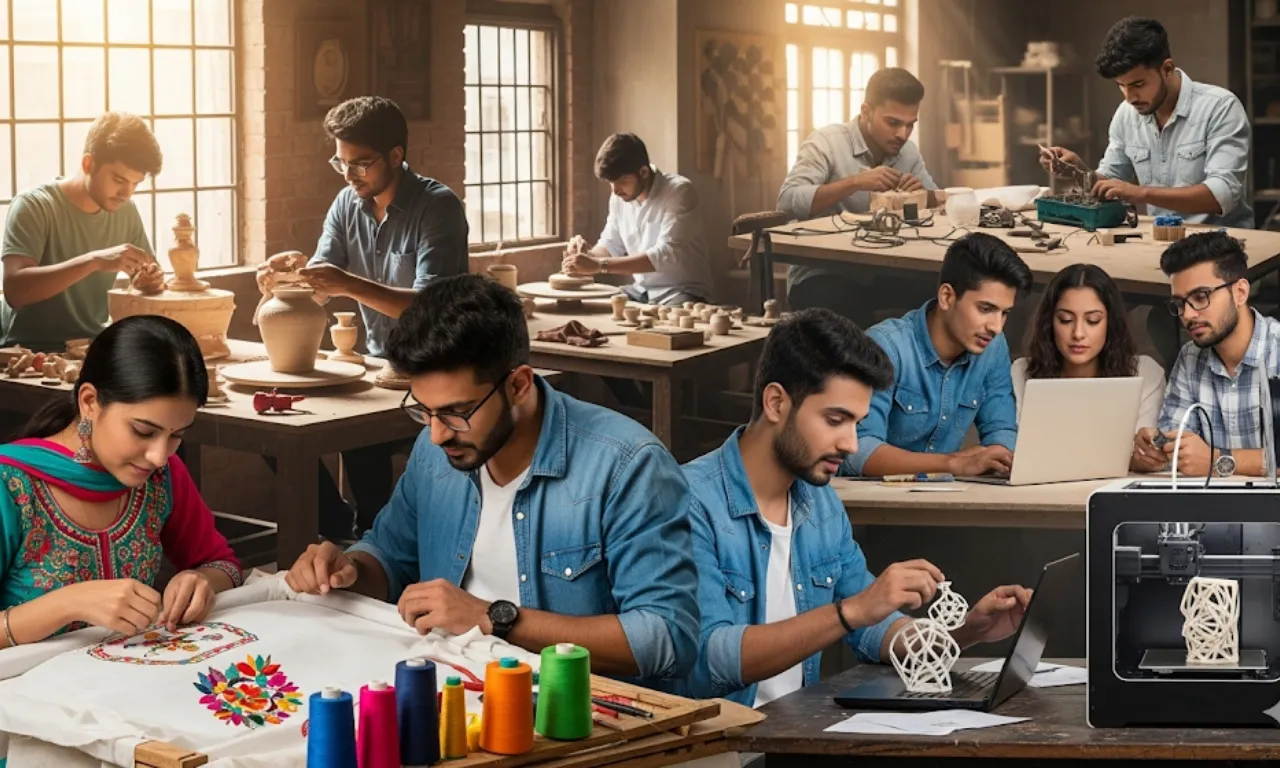
- Delhi’s Scheme for Skill Enhancement of Cottage Industries plans to train over 13,000 youth and artisans in 2025-26.
- Courses include apparel merchandising, IT help desk, Khadi fashion making, along with digital and AI skills training.
- Financial support includes monthly stipends, toolkits, loan help, and certification, focusing on SC/ST/OBC/EWS groups and women.
Delhi government started the Scheme for Skill Enhancement of Cottage Industries which aims to increase youth employment and protect heritage crafts. This scheme targets unemployed youth, artisans, and poor communities, offering them skill development in both traditional and modern trades. With a budget of Rs 50 crore, the scheme matches the vision of Atmanirbhar Bharat and aims to create lasting jobs while respecting India’s rich handloom tradition.
This scheme mainly helps unemployed youth, skilled and semi-skilled artisans, and people from poor backgrounds including SC, ST, OBC, EWS groups, and women. The government has set aside at least 50% of the training spots for these groups to promote inclusive growth. By focusing on these groups, the scheme aims to support communities that have often been left out of formal job sectors.
Training Programs and Skill Development Courses Offered
The scheme offers a range of courses made for real industry needs. These include apparel merchandising, logistics work, IT help desk support, self-employed tailoring, and Khadi fashion making. Trainees get daily classes on new technologies like artificial intelligence (AI), digital tools, marketing strategies, and soft skills. This mix of traditional craft skills with modern digital knowledge prepares participants for many job opportunities.
Financial Support and Incentives for Trainees
Participants get a monthly stipend of Rs 400 for up to five months to support their training. The scheme also provides toolkits to 2,500 artisans to help them start or improve their work. Loan help and certification after finishing the course further support trainees to establish themselves professionally. Visits to 500 artisans are also planned to expand their practical knowledge and market understanding.
Entrepreneurship Development and Job Creation
A key part of the scheme is the Entrepreneurship Development Programme (EDP), which lasts up to 10 days. This program combines hands-on skill building with business basics, helping trainees turn small crafts into successful businesses. The EDP follows guidelines from the Union Ministry of MSME and connects with national schemes like the Prime Minister’s Employment Generation Programme (PMEGP) and Interest Subsidy Eligibility Certification from KVIC. These partnerships offer extra support through loans and grants, encouraging self-employment and paid job creation.
Inclusion and Social Impact of the Scheme
The scheme focuses on social inclusion by reserving training spots for SC/ST/OBC/EWS groups and women, promoting fair access to skill development. It also plays an important role in protecting India’s heritage crafts, especially Khadi and village industries, by combining traditional artistry with modern technology. This approach not only preserves cultural heritage but also boosts economic growth and independence among youth and artisans in Delhi.
With training centers planned in every district of the national capital, the scheme makes sure it is easy to access. By mixing heritage crafts with AI and digital skills, the program sets an example for lasting employment and entrepreneurship, helping Delhi’s socio-economic growth.
For more details, you can visit the official Delhi Khadi and Village Industries Board website at https://dkvib.delhi.gov.in.