
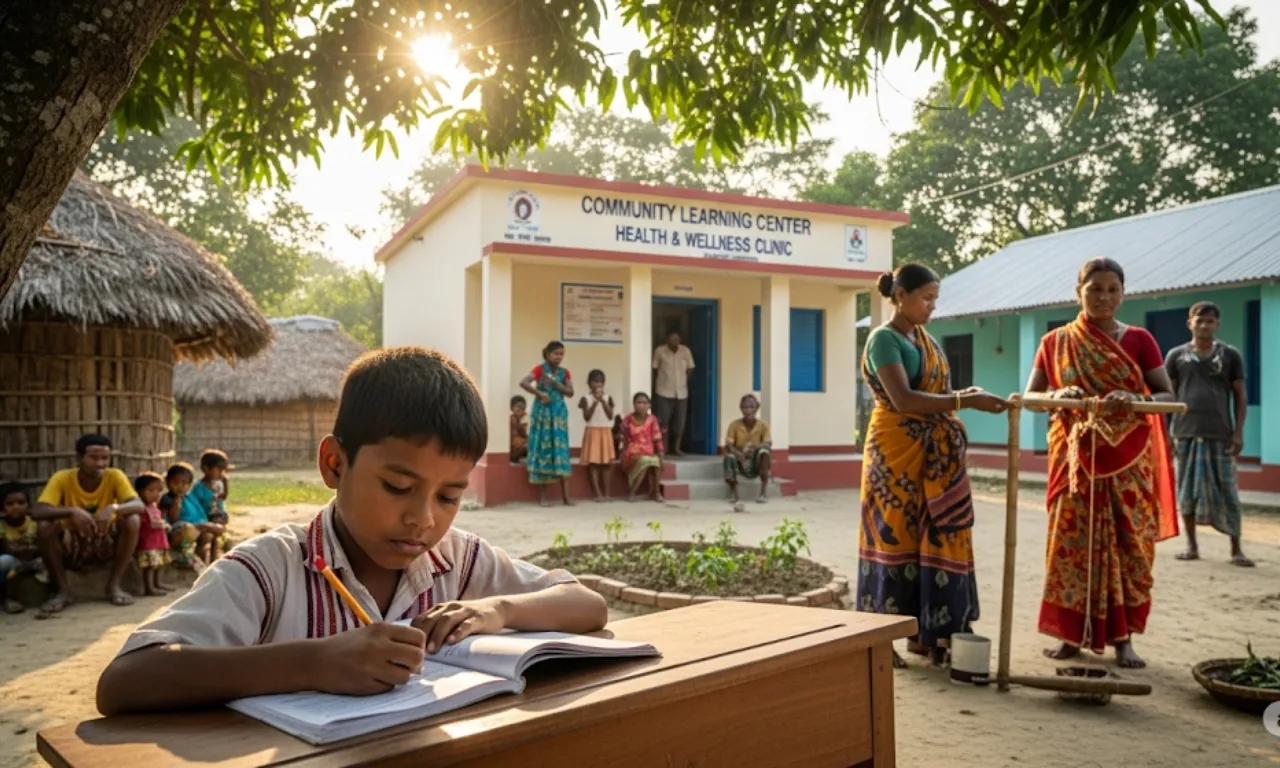
- The Central Government runs several schemes like DAPST, DhartiAabaJanjatiya Gram Utkarsh Abhiyan, and PM-JANMAN to support Scheduled Tribes in West Bengal.
- Financial help includes scholarships, grants under Article 275(1), and support to Tribal Research Institutes to promote education and preserve tribal heritage.
- Large fund allocations have been made in recent years for scholarships, infrastructure, and livelihood development benefiting tribal communities.
Central Government Schemes for Tribal Development in West Bengal focus on improving infrastructure, education, health, and livelihood for Scheduled Tribes. These programs include the Development Action Plan for Scheduled Tribes (DAPST), DhartiAabaJanjatiya Gram Utkarsh Abhiyan, Pradhan Mantri Janjati Adivasi Nyaya Maha Abhiyan, and many others started to close developmental gaps and help tribal populations.
Key Government Schemes for Tribal Development
Find out about major Central Government programs aimed at improving infrastructure, education, health, and livelihood for Scheduled Tribes.
Development Action Plan for Scheduled Tribes (DAPST)
This multi-ministry strategy involves 41 Ministries/Departments setting aside a part of their budgets each year for tribal development. It focuses on closing gaps in education, health, agriculture, irrigation, roads, housing, electrification, job creation, and skill development in tribal areas.
DhartiAabaJanjatiya Gram Utkarsh Abhiyan
Launched on 2nd October 2024, this major program covers 63,843 tribal villages across 30 States/UTs. With a budget of Rs.79,156 crore, it aims to fill infrastructural gaps and improve access to health, education, Anganwadi facilities, and livelihood opportunities benefiting over 5 crore tribals in 549 districts and 2,911 blocks over five years.
Pradhan Mantri Janjati Adivasi Nyaya Maha Abhiyan (PM-JANMAN)
Started on 15th November 2023, this mission focuses on Particularly Vulnerable Tribal Groups (PVTGs). With a budget of around Rs.24,000 crore, it aims to provide safe housing, clean drinking water, sanitation, education, health, nutrition, road and telecom connectivity, electrification, and sustainable livelihood within three years.
Pradhan Mantri Janjatiya Vikas Mission (PMJVM)
This scheme supports tribal livelihood by helping marketing and value chain development of Minor Forest Produce (MFP). It includes setting a Minimum Support Price (MSP) for selected MFPs and buying from State Agencies if market prices fall below MSP, along with infrastructure development and spreading knowledge.
Eklavya Model Residential Schools (EMRS)
Started in 2018-19, EMRS provides quality education to tribal children in their own environment. The government plans to set up 440 EMRSs in blocks with over 50% ST population and at least 20,000 tribal persons. Currently, 288 schools funded under Article 275(1) are being upgraded, aiming for a total of 728 EMRSs benefiting around 3.5 lakh ST students nationwide.
Also Read – Shramshree Scheme : West Bengal Announces ₹5,000 Monthly to Returning Migrant Workers
Financial Assistance and Grants for Tribal Welfare
Details on scholarships, pensions, and grants supporting tribal education, research, and welfare organizations.
Pre-Matric and Post-Matric Scholarships for ST Students
Pre-Matric Scholarships support students in Classes IX–X with parental income below Rs.2.5 lakhs per year. Day scholars get Rs.225/month and hostellers Rs.525/month for 10 months. Post-Matric Scholarships help students pursuing higher education with fees reimbursement and monthly scholarships ranging from Rs.230 to Rs.1200 depending on the course. Funding shares vary between Centre and States.
National Overseas Scholarships and Fellowships
These scholarships provide financial help to selected tribal students for postgraduate, PhD, and post-doctoral studies abroad. Each year, 20 awards are given, including 3 for PVTGs. Family income should not exceed Rs.6 lakhs per year. Additionally, 750 fellowships support higher education research within India.
Grants under Article 275(1) and to Voluntary Organizations
States with ST populations receive 100% grants under Article 275(1) to improve administration and welfare in Scheduled Areas. Grants-in-aid support voluntary organizations working in education, health, livelihood, and other tribal welfare projects.
Support to Tribal Research Institutes (TRIs)
Financial help supports establishing and strengthening TRIs to preserve tribal culture, heritage, and promote capacity building. Activities include research, documentation, tribal festivals, museum setup, and exchange visits. Funding is 100% grant-in-aid based on need and Apex Committee approval.
Fund Allocations for West Bengal (Last Three Financial Years)
| Scheme | 2022-23 (Rs. Crore/Lakh) | 2023-24 (Rs. Crore/Lakh) | 2024-25 (Rs. Crore/Lakh) |
|---|---|---|---|
| Pre-Matric Scholarship | 29.89 Crore | – | – |
| Post-Matric Scholarship | 34.06 Crore | 35.00 Crore | Provisional |
| Development of PVTGs | 665.95 Lakh | 0 | 1631.05 Lakh |
| Loan Disbursed by NSTFDC | 1643.33 Lakh | 1526.59 Lakh | 2233.75 Lakh |
| PMAAGY Fund Release | 3495.20 Lakh | 0 | 0 |
| Article 275(1) Grants | 4186.5 Lakh | 4744.4 Lakh | 3549.61 Lakh |
| Grants to Voluntary Organizations | 476.1 Lakh | 1167.79 Lakh | 1390.18 Lakh |
| EMRS Fund Release | 2303.67 Lakh | 1869.70 Lakh | 1789.50 Lakh |
These schemes and fund allocations show the government’s commitment to tribal welfare and development in West Bengal. If you belong to or work with tribal communities, checking these schemes can help you get benefits and support for education, livelihood, and cultural preservation.
For more details, visit the official Ministry of Tribal Affairs website: https://tribal.nic.in